The engine was on a dyno when it was built, but since then I’ve completely changed the front dress to accommodate the A/C compressor and the electric water pump. I also wanted to reduce belt slip on the supercharger pulley. The only way to know if it was going to work was to tune the car on a chassis dyno… see the video at the end.
So I towed the car up to Cohesion Motorsports who shares a facility with Kachel Motor Company (KMC). They have an inground SuperFlow AutoDyn dyno which features a pit — very useful so long as you don’t fall in. Nick and John from Cohesion (who’ve helped with some of the electrical system) prepped the car and Ed Senf flew in from Atlanta to tune the car.
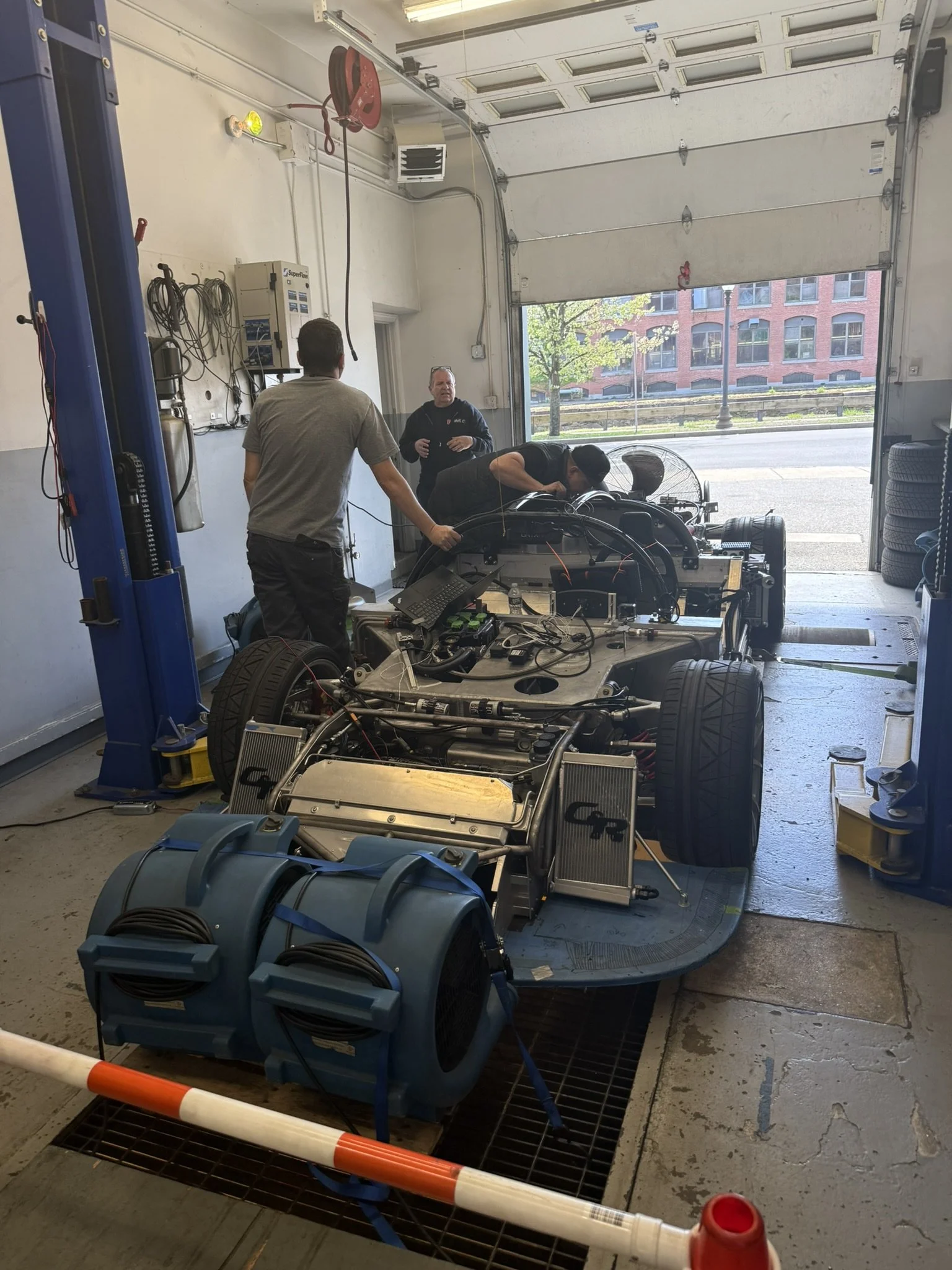
The safety bar in the front is to prevent someone like me from falling into the pit
During one of the early pulls, we lost all boost because the supercharger belt popped off. A quick inspection revealed that the tensioner had failed. This was a surprise, because with the optional ceramic bearing upgrade, it runs about a grand. Even with the body off, servicing the front dress on a mid-engine car is a nightmare. After removing the induction tube, machining one of Nick’s SnapOn sockets to fit the allotted space and a fair amount of profanity, we were able to remove the tensioner. It has a massive spring which slipped out of slot in the billet housing. Our best guess is that the slot was created to make it easier to install the powerful spring, but that also makes it easier for the spring to pop out. Looking at pictures on their website it appears that the slot doesn’t exist anymore. The manufacturer is sending a new one without even asking for proof of purchase, which seems to support our notion that they changed the design.
We were able to hack together a temporary fix for the tensioner and get the belt back on. A couple of small pulls later and the belt popped off again. Repeated the process again with the same outcome. After pulling the tensioner again we noticed that the M10 bolt had a slight bend in it. It’s a really long bolt that’s supported by my brackets, so we’re hoping that the issue was primarily caused by the failed tensioner and the not my design or fabrication of the brackets. I’m going to upgrade the bolt, with an ARP 12.9-Grade stud, a precision ground washer and a jet nut.
If that doesn’t work, I’ll need to pull the engine and redesign the serpentine system. The only changes that I can think of are to:
Replace the automatic tensioner with a manual one.
Reduce the diameter of the super damper and the supercharger pulley. This will reduce the speed of the pullies, but it will increase the potential that the supercharger pulley slips. Both of the pullies are custom and ATI has a 120-day lead time on custom super dampers.
Other than the defective tensioner, we learned the following:
The intake air was hotter than expected and intercooler coolant temp was too low. We ran the pump and noticed it was only drawing about a quarter of expected current indicating that we had too much air in the system. We cracked the bleeders on the heat exchangers, ran the pump and bled a bunch of air. Problem solved.
We maxed the MAP sensor’s range. I had installed a 2-bar sensor because I’m targeting about 16 psi of boost. Do’h…. I forgot to account for ambient pressure. I’ll replace it with a 2.5 or 3-bar sensor.
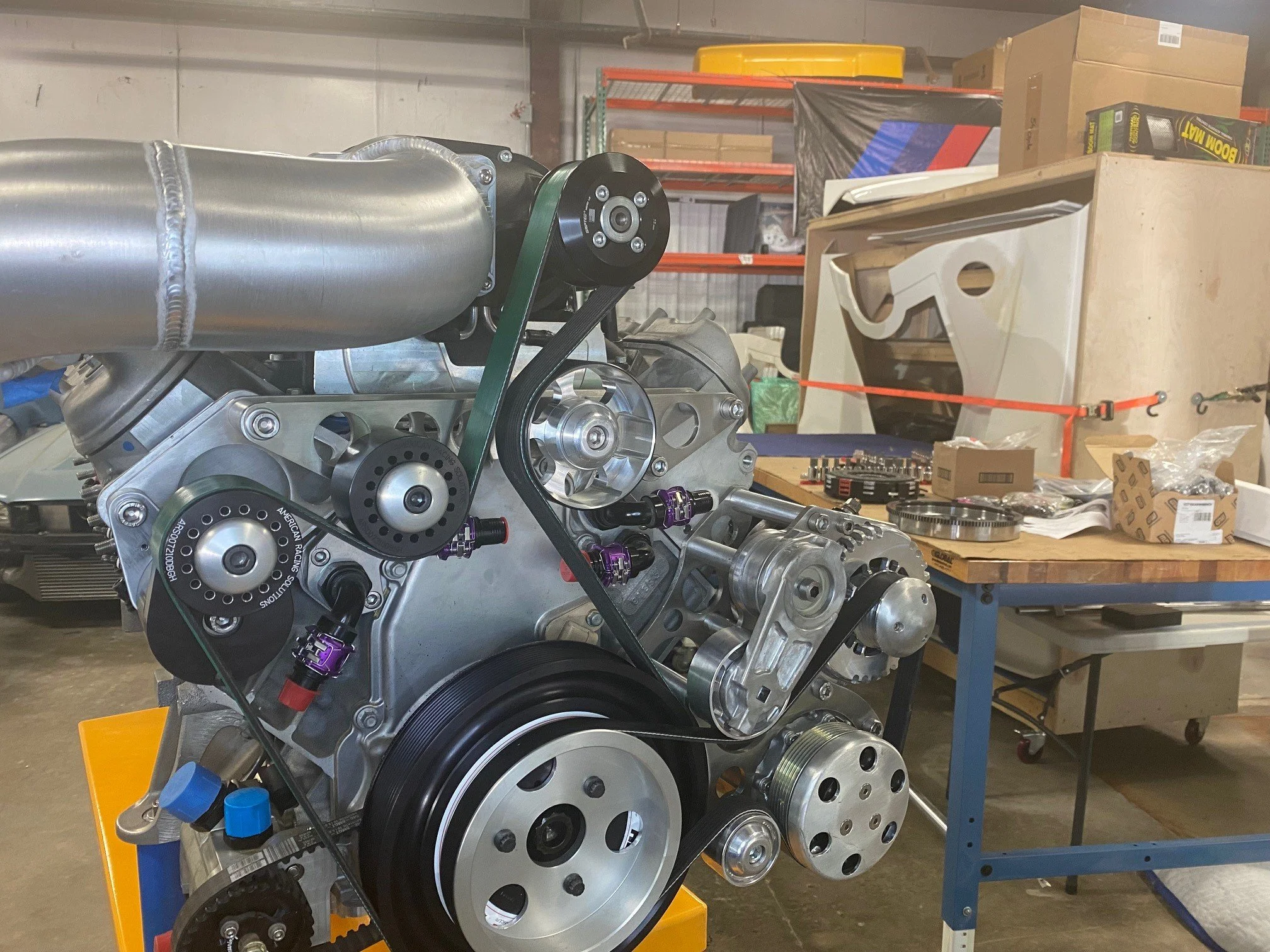
The stock supercharger serpentine had 8 ribs and drove the water pump as well. The new serpentine only drives the supercharger, has 10 ribs, more wrap and a better tensioner (in theory).
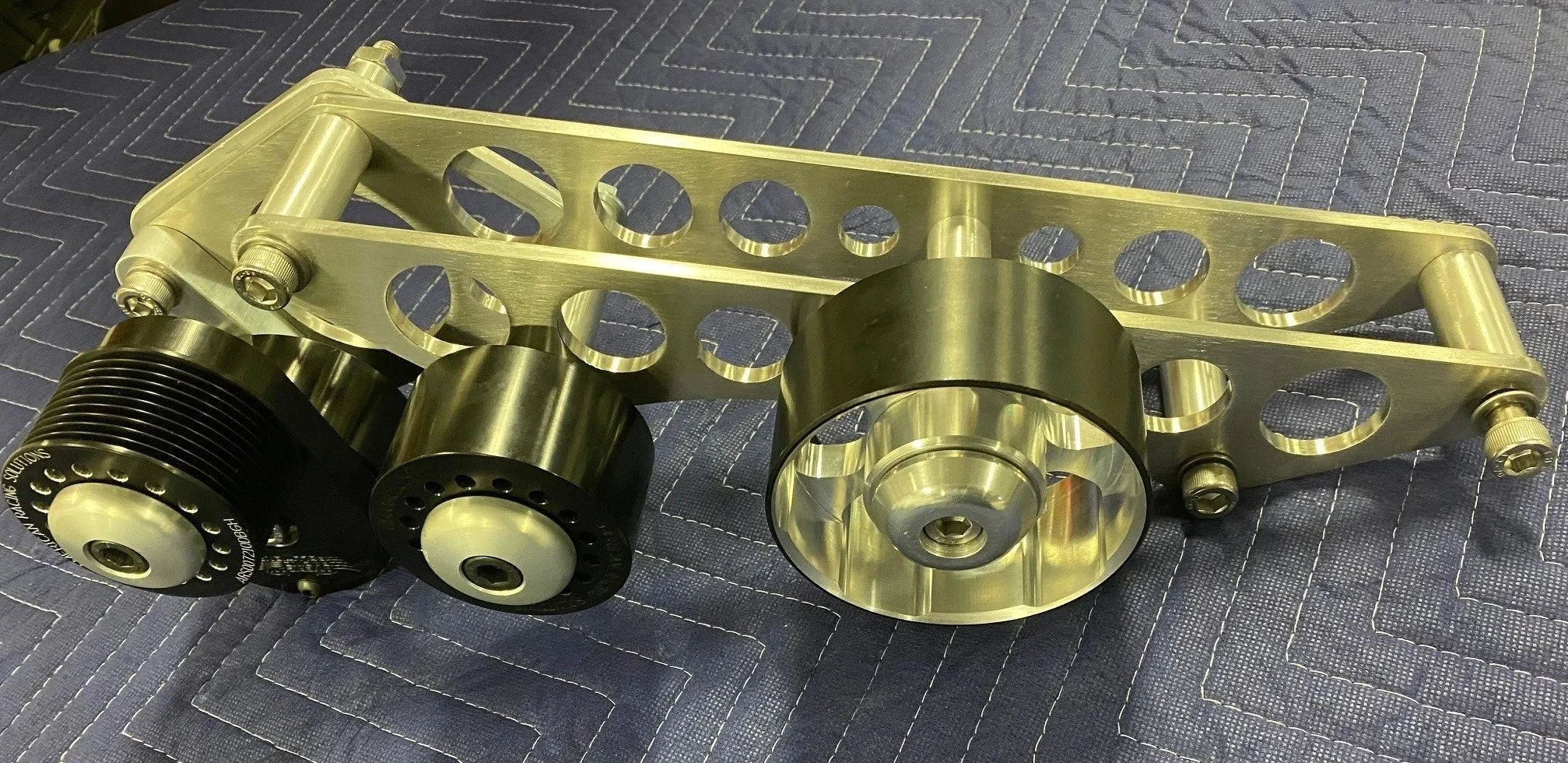
The brackets should be sturdy enough
The good news is that nothing leaked and, other than the tensioner, nothing broke. The better news is that the equal-length 180-degree cross-over headers and X-pipe sounds great… a bit like the BMW LMDH. The muffler/catalytic converter bypass is configured to open when the throttle position is exceeds 80% at which point things get really loud. The predominate whine is from the straight-cut gears as opposed to the supercharger. Upshifts were awesome, but downshifts were terrible because we weren’t achieving good blips. Looking at the data, Ed believes this was due to the issue with tensioner which resulted in the supercharger restricting rather than increasing air flow.
Here’s the video…